AI automation agency, Wales
AI Automation Agency in Bangor, Gwynedd: Education, Healthcare & Public Sector
By Taha Bilal, Founder of Aristral · Reviewed by Huzaifa Jan Asim, CTO (developer@aristral.com)
Last updated: 30 June 2026
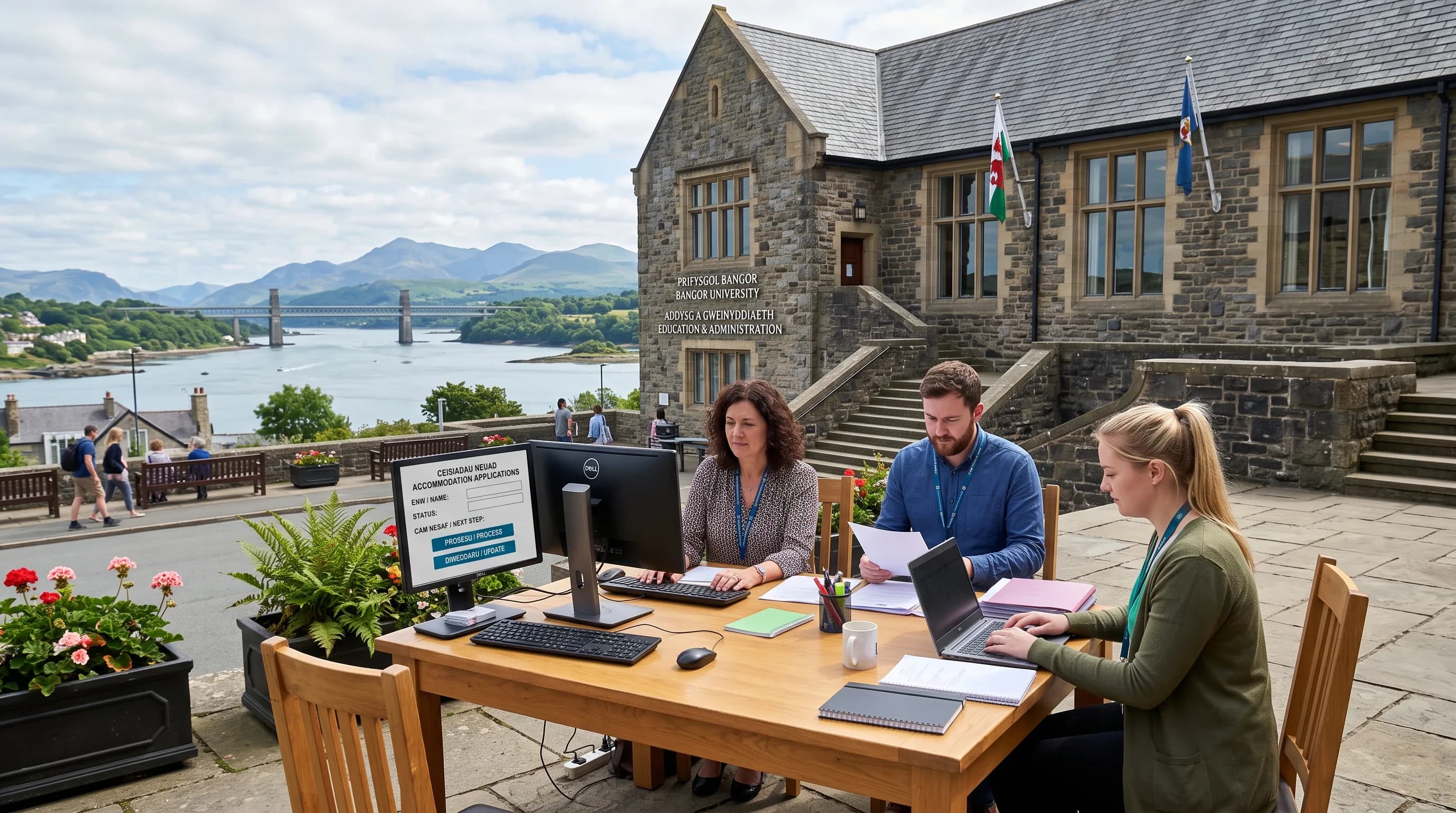
Picture two organisations on the same day in Bangor, Gwynedd. A university service team is fielding a wave of prospective student enquiries at the start of term, each one routed manually through email inboxes, forms and spreadsheets. A few streets over, an NHS Wales-facing clinic is logging referral paperwork by hand while the waiting list grows. Both teams are capable, experienced and thoroughly stuck doing work that software should be handling.
That pattern is common in Bangor's economy. The city's working life is shaped by Bangor University and NHS Wales, alongside a substantial public sector and a tourism economy with its own seasonal demand spikes. The organisations that serve these sectors run on enquiry, referral, application and form flows. And in our experience scoping automation projects in similar university-and-health economies, those flows are almost always still being managed manually.
Workflow automation is software that runs a repeatable business process end to end without manual steps. When it is designed correctly, it does not replace the people: it removes the part of their day spent copying, routing and chasing, so they can focus on the work only they can do.
The regional context: why Bangor's sectors are ready for automation
Bangor is one of those cities where the institutional fabric is strong but the back-office technology often lags. Bangor University, NHS Wales services and Gwynedd Council together employ a significant share of the workforce. All three manage high-volume, repetitive enquiry and document flows. All three face the same constraint: peaks arrive on a schedule (term start, flu season, planning cycles) but staffing does not scale to match.
The Gwynedd Council Digital Strategy shows public institutions across the region investing in digital capability beyond basic infrastructure. When a local authority commits to digital transformation, partner organisations and private businesses in the supply chain tend to follow. Automation adoption clusters: one organisation modernises a process, others in the same economic ecosystem notice.
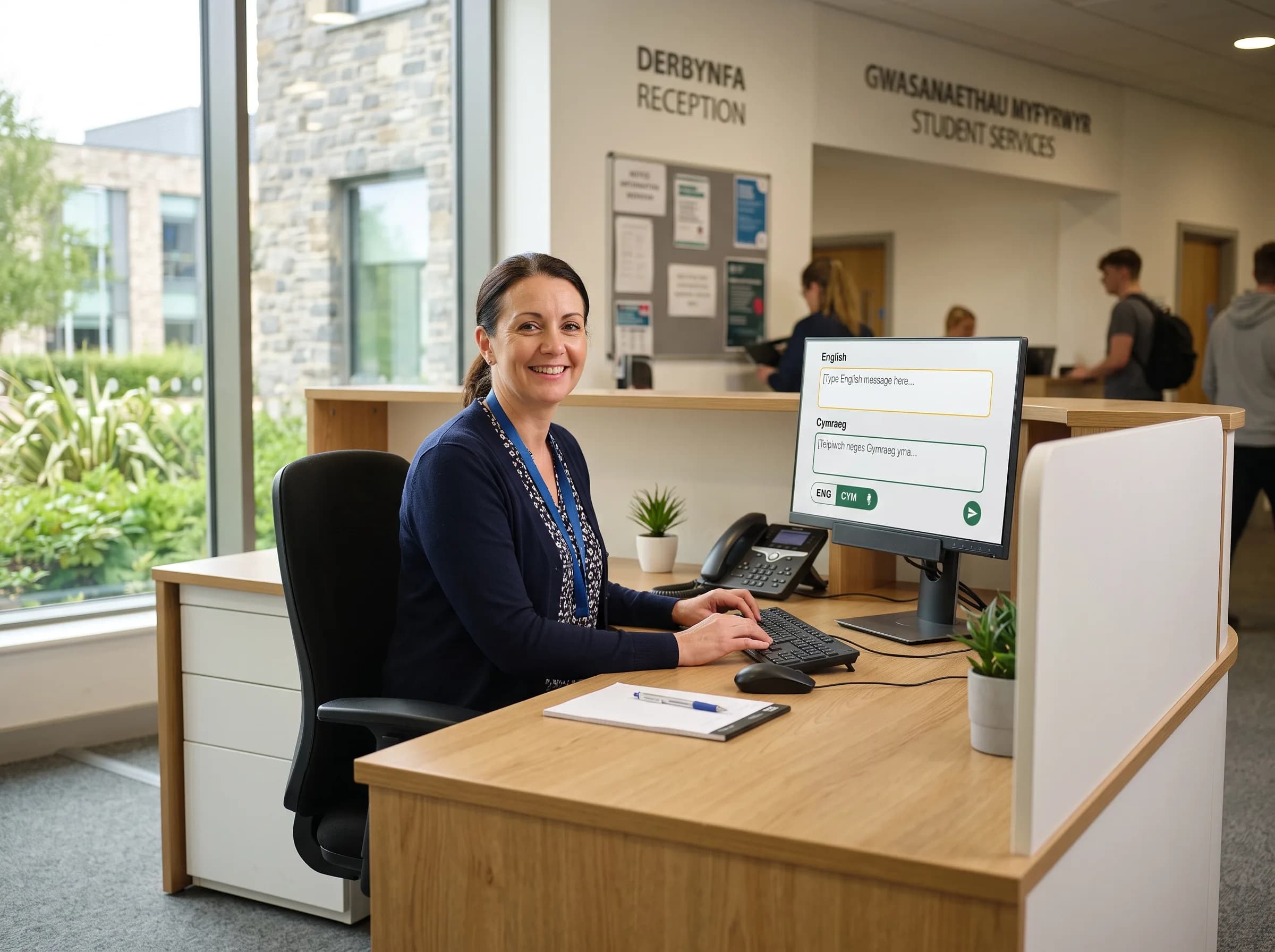
North Wales adds a layer most UK university-and-health cities do not have. A large share of Gwynedd residents speak Welsh, and Gwynedd Council is subject to a statutory Welsh Language Standards obligation that requires bilingual service delivery. That obligation extends in practice to organisations working within or alongside the council and its funded bodies. Serving people here means Welsh and English from the start, not as an afterthought. A bilingual gap reduces reach and adds coordination overhead. That is one of the places where well-configured AI automation does real work.
Citable fact: A bilingual AI enquiry assistant configured for Welsh Language Standards can typically be deployed for a Gwynedd organisation in around 21 days from scoping sign-off, covering both Welsh and English responses without a live translation layer, which makes outputs more consistent and auditable against the Welsh Language Standards obligation.
A day in the life: what manual enquiry loads actually cost
When we scope a workflow in a university services context, the first thing we look at is enquiry triage: how many people touch a single question before it gets answered, and how many of those touches add information versus just move it along. The typical answer is sobering. A prospective student email arrives, gets read by an admissions coordinator, forwarded to a faculty contact, replied to two days later, and then triggers a follow-up when the student does not respond quickly enough. Bangor University generates substantial enquiry volume across admissions, student services and course queries at any given point in the academic calendar.
AI automation does not eliminate that conversation. In our scoping experience, the majority of enquiries fall into common-question categories (the acknowledgement, the common-question resolution, the routing to the right person) and those are handled instantly and consistently, in whichever language the enquirer uses. The human conversation happens when there is actually something nuanced to discuss.
The same logic applies in a healthcare setting. Triage enquiry chatbots can surface the most relevant information, route to the correct service, and handle the administrative capture of referral details before anyone picks up a phone. Appointment flow automation removes the manual back-and-forth that often accounts for hours of administrative time across a week. That time goes back to clinical coordination.
The Aristral service stack and how it fits Bangor's industries
Artificial intelligence automation is software that uses machine learning or language models to handle tasks that previously required a human decision at each step. That includes understanding natural language, extracting data from documents, classifying and routing cases, and generating consistent responses at scale.
Here is how we map Aristral's packaged solutions to Bangor's lead sectors:
Education and Bangor University supply chain. An AI customer support chatbot configured for an admissions or student services context handles enquiries around the clock, across both Welsh and English, without adding headcount. A sales intelligence RAG (retrieval-augmented generation) system lets staff query course handbooks, policy documents and procedural guides in plain language rather than hunting through folders. Document processing automation handles application form intake and data extraction so coordinators review decisions, not data entry.
Healthcare and NHS Wales-facing organisations. A triage enquiry chatbot pre-qualifies patient contacts and routes them to the correct service pathway. Lead routing automation ensures referral details reach the right clinical team without manual forwarding. Records automation extracts structured data from unstructured referral documents, removing a category of error that tends to accumulate in high-volume clinical administration.
Tourism and public sector. North Wales draws seasonal visitor demand, with enquiry peaks compressed into summer and bank-holiday windows where manual staffing cannot keep pace. A resident/visitor chatbot covers those peaks consistently, in both Welsh and English, without permanent headcount overhead. Form routing automation means public-sector submissions reach the correct team quickly and with a complete audit trail.
Professional services. Accountancy practices, legal firms and independent consultancies in Gwynedd run on appointment scheduling, client intake forms and document exchange. Consider a Gwynedd solicitors firm with a bilingual client base: a prospective client contacts the firm in Welsh, the intake coordinator manually translates the query, re-types the contact details into a case management system, and books an initial appointment across two separate tools. That loop commonly takes 20 to 40 minutes per new enquiry. A configured AI customer support chatbot handles the initial bilingual contact, collects structured intake information in whichever language the client uses, and routes it directly to the right fee-earner. Document processing automation then extracts structured data from client-supplied forms and returns it to the case management system, cutting the administrative loop before anyone billable needs to touch the file.
Which Bangor sectors benefit most from AI automation?
Not every sector reaches the automation tipping point at the same time. In Bangor's economy, education and healthcare are earliest adopters because their enquiry load is both high-volume and structurally predictable: term cycles and referral windows repeat on a known schedule, which means the automation ROI is calculable before a build starts. The public sector follows closely, driven partly by the statutory Welsh Language Standards obligation that requires bilingual output at a consistency level a stretched team cannot maintain manually.
Tourism operators sit at the other end of the adoption curve: the case is strong but the urgency is seasonal, concentrated into summer and bank-holiday windows when North Wales visitor demand peaks. Professional services firms are the laggard segment in most markets, but in Gwynedd the combination of small-firm headcount and complex bilingual client intake creates a ROI case that is catching up fast.
Getting started: what the process looks like
We do not ask Bangor-based organisations to commit to a full build before they know what is worth building. The first step is a scoping conversation: you walk us through your highest-volume repeatable process, we tell you honestly whether automation will give you meaningful capacity back, and we outline what a build would involve.
Packaged deployments typically go live in around 21 days. Custom or bilingual builds with deeper integrations into existing case management or patient record systems run four to eight weeks. Either way, you have a clear, costed plan within a week of the first call.
We are transparent about scope: if a process is too varied or too small to justify automation, we say so. That policy costs us some engagements and saves clients from unnecessary projects.
Client data handling is governed under UK GDPR from the scoping stage.
Author bio
Taha Bilal is the founder of Aristral, a UK AI automation and SEO agency based in Clifton, Bristol. He has run SEO and digital-growth campaigns for SMB and SaaS clients since 2018 and now leads Aristral's AI automation and GEO programmes for service businesses across the UK and US. This page was reviewed by Huzaifa Jan Asim, CTO (developer@aristral.com).
Ready to talk?
If your team in Bangor or wider Gwynedd spends meaningful time on enquiry triage, form processing or referral routing, that time is recoverable. Most organisations we work with get a clear, actionable plan within a week of a first call.
Talk to our team at /contact and tell us the process you most want off your plate.
Aristral provides AI automation across the UK for education, healthcare, professional services and public-sector organisations.
Packaged solutions
Not every Bangor, Gwynedd business needs a custom build. These solutions cover common automation needs and are scoped around your workflow, data and approvals.
AI customer support chatbot
Trained on your docs and tickets. Escalates when confidence is low or a human is requested.
Lead routing automation
Score, deduplicate, and route inbound leads to the right owner from forms, ads, or partner feeds.
Document processing automation
Turn PDFs and email attachments into structured data your CRM and workflows can act on.
Sales intelligence RAG
Assistants over playbooks, transcripts, and CRM notes for call prep and follow-ups.
More Aristral services in Bangor, Gwynedd
AI automation can sit alongside our SEO, web development and CRM integration work.
Industries we serve in Bangor, Gwynedd
Industry-specific automation patterns, not generic chatbot pitches.
FAQs: AI automation in Bangor, Gwynedd
Can an enquiry chatbot operate in both Welsh and English?▼
Can automation handle student and patient enquiry surges?▼
Is personal and health data kept secure?▼
Do you work with smaller Gwynedd organisations?▼
How quickly can a bilingual assistant go live?▼
Areas we serve near Bangor, Gwynedd
We also work with teams in these locations:
Ready to automate workflows in Bangor, Gwynedd?
Book a free 30-minute strategy call. We review your operations, prioritise high-impact automation, and give a straight answer on what is worth building.