AI automation agency, South East England
AI automation agency Oxford for workflow automation in Oxfordshire

Written by Taha Bilal, co-founder of Aristral, with SEO and digital-growth experience for SMB and SaaS clients since 2018. Last updated 15 September 2026.
Verify us through the Companies House record, the Aristral LinkedIn company page, and our clients page, where each consented result links to the client's own website.
Aristral helps Oxford businesses improve real processes such as inbound email, document handling, lead routing, research retrieval and finance administration. Businesses searching for an AI automation agency Oxford can contact us to map the process, connect the tools they already use, and measure agreed changes in time, errors, handoffs, or response status. We serve Oxford and Oxfordshire from Bristol, with on-site visits by arrangement. Contact us to discuss the workflow.
What a workflow automation agency does for Oxford organisations
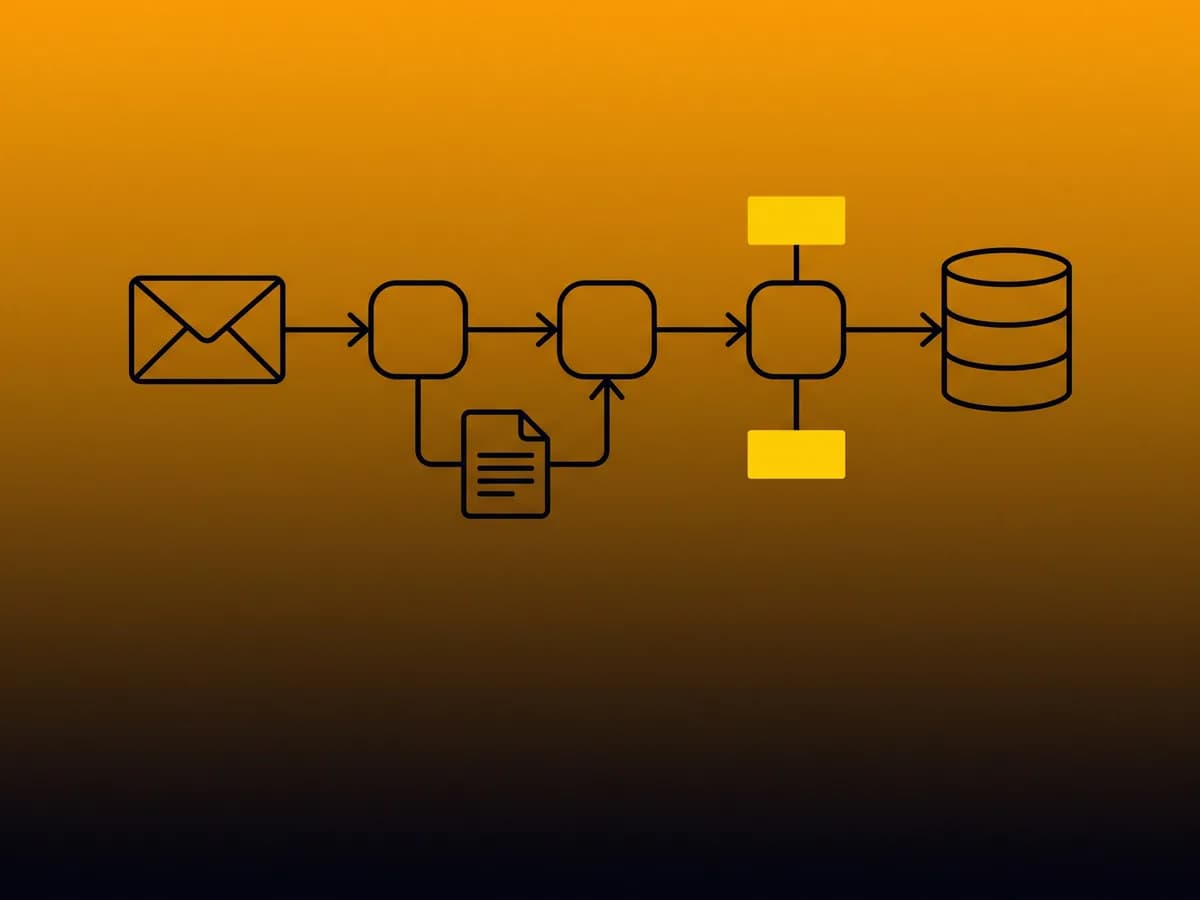
A workflow automation agency designs and maintains a sequence of actions that moves information between people and software. For an Oxford organisation, that might mean classifying an enquiry, extracting fields from an attachment, checking a rule, creating a CRM record, then asking a person to approve the next step. The aim is to reduce repetitive handling while keeping judgement with an accountable person.
AI is useful here when a task has a clear trigger, a known destination, repeatable decisions, and a sensible exception route. We document those conditions before proposing a build. When a human must make a legal, clinical, academic, or commercial decision, the workflow keeps that decision with the named person.
The service covers process design, integrations, testing, training, and ownership of the resulting assets. A provider serving Oxford should explain what enters the workflow, what comes out, where approval happens, how actions are logged, and what happens when a step fails. Teams looking for a workflow automation agency in Oxford need those details before choosing a provider.
Where Oxford and Oxfordshire teams can use automation
Oxford has several settings where information passes between specialist staff and general business systems. University spin-outs and research organisations may need reliable retrieval across policies, research documents, grant material, or internal guidance. Life sciences and medtech teams at Oxford Science Park and Harwell may need document processing and controlled handoffs around technical or regulatory work. Each workflow still needs a clear owner and review stage.
Professional-services firms can route enquiries, prepare draft proposals, organise meeting notes, or keep CRM records current. Publishers can classify submissions, move accepted work into production, then notify the right contributor when a status changes. Colleges and hospitality operators can triage enquiries and connect forms with team systems.
Oxfordshire logistics businesses along the A34 and M40, including teams in Bicester, Abingdon, Didcot, and Banbury, may have repetitive work across bookings, delivery documents, customer updates, and exception handling. Automation can connect those steps while leaving operational decisions with dispatch or account staff.
Some Oxfordshire organisations need AI automation across departments rather than inside one software package. We begin by checking handoffs, permissions, data quality, and exceptions.
Businesses comparing business automation services in Oxford should assess who owns the workflow, who can access it, and how the result will be measured.
What Aristral automates and integrates
We build around the systems that hold your operational data. The design depends on access, permissions, data quality, and the result you need to measure.
- Inbound email triage: classify messages, identify urgency or topic, extract key fields, and route the item to a queue or owner.
- Document processing: read permitted PDFs and attachments, extract structured fields, flag missing information, and send the record for review.
- Lead routing: capture enquiries, remove duplicates, apply agreed rules, and assign the lead to the right person in the CRM.
- RAG assistants: let approved users search policies, research documents, playbooks, and internal material with answers grounded in the connected sources.
- CRM and finance integrations: pass approved information between systems so staff do not re-key the same record at each stage.
Our implementation work can use n8n, Make, HubSpot, and Zapier where they fit the process. See our pages for n8n, Make, and Zapier integrations. Tool choice follows the workflow, access model, and maintenance needs.
For a customer-facing use case, see our AI customer support chatbot. For internal operations, document processing automation covers a common starting point. A research or sales knowledge use case may suit sales intelligence RAG.
If an automation project touches website content, Google's Search Essentials set out technical and spam policies. Google's structured data guidance explains how to implement and test supported markup. Google's Core Web Vitals guidance describes the user-experience signals a site team may choose to measure.
How we measure a workflow before and after automation
We agree the measure before implementation. Depending on the workflow, that may be handling time, queue age, manual handoffs, data completeness, exception rate, response status, or records needing re-entry. A document process may need an accuracy sample and exception log. A lead process may need routing accuracy and time to ownership.
We do not turn an untested estimate into a published result. If an organisation wants to report time saved, we record the baseline, period, scope, calculation, and permission to publish. This matters where source data is sensitive or the outcome requires subject-matter review.
From discovery to handover
Our delivery outline was updated on 15 September 2026. We adapt the work to the process and access available.
Discovery: I start by reviewing the trigger, systems, people, permissions, documents, decisions, and exception paths. We speak to the people who perform the work and the person accountable for the outcome. I record the current process instead of relying on a diagram that no longer matches practice.
Pilot: We select a bounded workflow with a defined input and a safe review point. The pilot uses representative data where permission allows. We specify what the automation may do, what it must not do, and when it must hand control to a person.
Evaluation harness: We create checks for classifications, extracted fields, routing decisions, source grounding, failure states, and audit events. We test a RAG assistant against approved questions and documents. We check a document workflow against known examples and exceptions. The team receives the harness at handover and can use it after launch.
Handover: We provide the workflow configuration, prompts where relevant, integration settings, test cases, operating notes, and ownership information as exportable assets. We explain how to review failures, change an approved rule, revoke access, or stop the workflow. The team can maintain the automation or ask us to continue supporting it.
Oxford sector examples without invented results
For a university spin-out, partnership or investor emails could be classified by topic, routed to the correct owner, and logged in the CRM. A person still decides whether the opportunity is suitable. Research staff could ask a RAG assistant about approved internal documents, with answers linked to source material.
For a life sciences or medtech team, document processing could identify fields in permitted submissions or supplier documents and send incomplete records to a review queue. The workflow should preserve the source file, record the extracted values, and make the approval state visible. It should not be presented as clinical or regulatory advice.
For academic publishing, manuscript intake can be organised by agreed metadata before an editor reviews it. Production status updates can move between a publishing system and controlled email notifications. Rights and permissions tasks can be surfaced when a required field or approval is missing.
For professional services, an enquiry can create a structured record, identify the service area, and route it to the right owner. A finance integration can prepare information for review rather than silently changing a ledger. For hospitality and colleges, the same principles apply to requests, forms, FAQs, and internal handoffs.
For Oxfordshire logistics, a workflow can collect delivery documents, identify an exception, and notify the accountable operator. It should preserve the original data and record who approved any change. The aim is traceable processing, not an unreviewed dispatch decision.
UK GDPR, PECR, and data-residency guardrails
We design proposed data handling around applicable UK GDPR requirements and document the controls for review. The ICO UK GDPR guidance covers the obligations organisations need to consider when processing personal data. We help map the data, purpose, access, retention, processor relationships, and deletion route. Your organisation remains responsible for its legal decisions and policies.
Email outreach and automated marketing require a separate check. The ICO PECR guide explains rules relevant to electronic communications, and the ASA/CAP Code covers advertising standards. We can help configure consent, suppression, preference, and audit steps, but we do not treat a workflow as permission to contact people.
Data residency needs a design decision. We identify where each connected system stores and processes data, whether a provider offers a suitable UK or European region, what contractual terms apply, and whether sensitive fields can be minimised or kept in the organisation's own system. If a third-party model or OCR service is proposed, the data path and retention settings need explicit review.
Access is limited by role where the connected systems support it. Automated actions should be logged with the trigger, timestamp, record, change, and approval state. Sensitive research, student, patient, employee, or client material needs a documented access and retention decision before it is connected.
Evidence from automation-related client partnerships
Our permitted evidence is not an Oxford case study, so it does not establish an Oxford result. It shows the kinds of relationships and technical work that inform our delivery.
Shah & Shah Lawyers in Mississauga, Canada had a profile describing immigration and property work while the site sold personal injury. We rebuilt the profile and site around the marketed work. The firm now ranks first in the Mississauga pack for personal injury lawyer and is a CaseFlow partner. This is a consented client result published on our clients page, not an Oxford result.
BusinessMarketingNY in New York became a technology partner. We are building an AI-native accounting platform with them. Nova io in Canada began as a client and became our sole North American distributor. These are named partnership outcomes from the approved evidence bank, not promises about a local Oxford engagement.
Why choose Aristral for Oxford workflow automation
Aristral Ltd is Bristol-based and works with Oxford and Oxfordshire organisations remotely, with on-site visits by arrangement. We do not claim an Oxford office or local Oxford staff.
The provider chosen by an Oxford team should make the workflow understandable to its owner. We show the trigger, data path, decision point, test result, and handover record so the system can be reviewed after launch.
You retain the automation assets and documentation. We use existing tools where appropriate, integrate rather than duplicate systems, and identify the point where a person must approve or correct an action. If the process is not suitable for automation, the recommendation should say so.
For related work, see AI automation solutions and CRM integrations. Our about page explains who is responsible for delivery and technical review.
Contact Aristral about automation in Oxford
Bring one process to the conversation: a shared inbox that needs sorting, documents that need extracting, leads that need assigning, or internal knowledge that is difficult to search. We will ask what starts the process, where it currently goes, which decisions need a person, and how you want to measure change.
Aristral Ltd, company number 17123077. Trading address: 16 Beaufort Road, Clifton, Bristol BS8 2JY. Phone: +44 7405 160066. Email: admin@aristral.com. Hours: Monday to Friday, 9:00am to 6:00pm. See our privacy information. Contact us to discuss the next step.
Packaged solutions
Not every Oxford business needs a custom build. These solutions cover common automation needs and are scoped around your workflow, data and approvals.
AI customer support chatbot
Trained on your docs and tickets. Escalates when confidence is low or a human is requested.
Lead routing automation
Score, deduplicate, and route inbound leads to the right owner from forms, ads, or partner feeds.
Document processing automation
Turn PDFs and email attachments into structured data your CRM and workflows can act on.
Sales intelligence RAG
Assistants over playbooks, transcripts, and CRM notes for call prep and follow-ups.
More Aristral services in Oxford
AI automation can sit alongside our SEO, web development and CRM integration work.
Industries we serve in Oxford
Industry-specific automation patterns, not generic chatbot pitches.
FAQs: AI automation in Oxford
What does an AI automation agency in Oxford do?▼
What is the difference between AI automation and workflow automation?▼
Can you connect HubSpot, finance tools, n8n, Make, or Zapier?▼
How do you protect research and business data?▼
Can a RAG assistant answer questions about our policies or research documents?▼
Do you work with Oxfordshire businesses remotely?▼
How do we start an automation project?▼
Areas we serve near Oxford
We also work with teams in these locations:
Ready to automate workflows in Oxford?
Book a free 30-minute strategy call. We review your operations, prioritise high-impact automation, and give a straight answer on what is worth building.