Scalenut vs NeuronWriter: which should you choose?
Scalenut vs NeuronWriter: compare their SEO workflows, content optimisation, strengths and trade-offs. See where Koala AI fits as a third option.

Key takeaways
- NeuronWriter focuses on SERP-driven optimisation and topic coverage. It does not run your whole pipeline.
- Koala AI generates article drafts; its output still needs human review and first-hand input.
- Scalenut combines keyword research, briefs, drafting and grading, with language support and review terms to check.
- All three improve topical coverage. None reliably ships valid schema or site-aware internal links, and none can manufacture first-hand experience.
- These are AI-assisted tools, not agentic systems. If your problem is rankings rather than drafting speed, the tool is not the bottleneck.
Scalenut vs NeuronWriter is a choice between an all-in-one SEO content workflow and a SERP-driven optimisation editor. Koala AI is a third option for generating article drafts. These tools do different jobs, so compare their workflows, evidence and review requirements rather than expecting any one of them to rank a page on its own.
Below: what each tool does, where it helps, and what still needs a person, which decides whether any AI SEO content tool can get a page ranking on its own.
Scalenut vs NeuronWriter: the direct comparison
Scalenut brings research, briefs, drafting and grading into one suite. NeuronWriter concentrates on SERP-based optimisation and coverage guidance. Choose Scalenut when you want a connected workflow; choose NeuronWriter when your main task is improving an existing draft against search results. Koala AI is the third option when draft generation is the main need.
Koala AI vs Scalenut vs NeuronWriter at a glance
The quickest way to read the difference is by the unit each tool sells: Koala sells words, Scalenut sells finished articles, NeuronWriter sells SERP analyses.
| Koala AI | Scalenut | NeuronWriter | |
|---|---|---|---|
| What it is | One-click article generator | All-in-one SEO content suite | SERP-driven optimisation editor |
| Primary workflow | Article generation | Research to grading | SERP optimisation |
| Best for | Volume drafting on a budget | One dashboard for the whole flow | SEOs optimising against the SERP |
| Main weakness | Generic, shallow E-E-A-T | Non-English quality + billing trust | Not a full pipeline, more manual |
Plan limits, language support and features change, so check each vendor's current documentation before you choose. The comparison below is about workflow.
What each tool actually is
Koala AI (koala.sh)
The same one-shot model that makes it fast is the reason its output reads like everyone else's. Koala is built for speed and volume, not for the SERP-by-SERP optimisation that lifts a page above the pack.
Scalenut
Public reviews describe non-English quality concerns, account-deletion problems and billing complaints. Treat these as user reports, not a controlled product test, and check recent reviews and current terms before choosing a supplier.
NeuronWriter
It tells you what to cover instead of producing words, and it needs more of an operator than the other two, which is why skilled operators prefer it.
How we compared them
Every vendor claims "content that ranks", so we assessed the three things that decide whether a page earns rankings and AI citations:
- E-E-A-T signal density, how much genuine experience, expertise and trust the output carries, versus generic filler.
- Schema recommendation accuracy, whether the tool produces valid, query-appropriate structured data, or leaves it to you.
- Internal-link logic: whether it links to the right pages on your site, based on your live structure, or just inserts generic links.
The findings come from hands-on use of all three plus their published capabilities. There are no invented scores, and you can check each point against the vendor's own documentation.
Workflow and trade-offs
Whichever you pick, count the review and publishing work in your selection criteria. None of the three removes it: Scalenut speeds up the steps from research to grade, NeuronWriter improves a draft you already have, and Koala produces drafts that still need editing.
Where each tool wins, and where it breaks
E-E-A-T signal density
NeuronWriter is strongest here, and it is still partial. Its SERP analysis surfaces the entities and sub-topics Google expects on the page, which lifts topical depth, a real component of expertise. Scalenut sits in the middle. Koala is weakest: a one-shot generator produces fluent, on-topic prose that reads like every other AI draft, with no distinct point of view.
The ceiling is the same for all three, though. No AI writing tool manufactures experience. The first "E" in E-E-A-T (first-hand experience, real testing, original data, named authors) is the one signal software cannot fake, and it is exactly what separates content that ranks from content that does not.
Schema recommendation accuracy
This is a shared blind spot. None of the three reliably ships valid, query-appropriate structured data. Koala outputs clean HTML but little usable schema; Scalenut and NeuronWriter focus on body content and term coverage, not the JSON-LD that drives rich results and AI Overview eligibility. In every case you still need a separate schema step. Given that a missing datePublished is one of the most common reasons AI Overviews skip an otherwise citable page in 2026, this gap costs more than it looks.
Internal-link logic
The same pattern repeats. Koala can auto-insert links, but crudely and without knowledge of your site. Scalenut and NeuronWriter largely leave internal linking to you. None of the three reads your live sitemap, finds the semantically closest existing pages, and recommends anchor text that strengthens a cluster rather than diluting it. Internal-link drift slowly weakens a cluster, and none of these tools touch it.
| Evaluation axis | Koala AI | Scalenut | NeuronWriter |
|---|---|---|---|
| E-E-A-T signal density | Weak | Adequate | Strongest of the three |
| Schema recommendation | Minimal | Limited | Limited |
| Internal-link logic | Generic auto-links | Mostly manual | Mostly manual |
The thing none of these three tools do
They do not plan the next step, check their own work against the live SERP, fix the schema, repair the internal links, submit for indexing, or watch what happens after publish. That is the line between AI-assisted and agentic SEO.
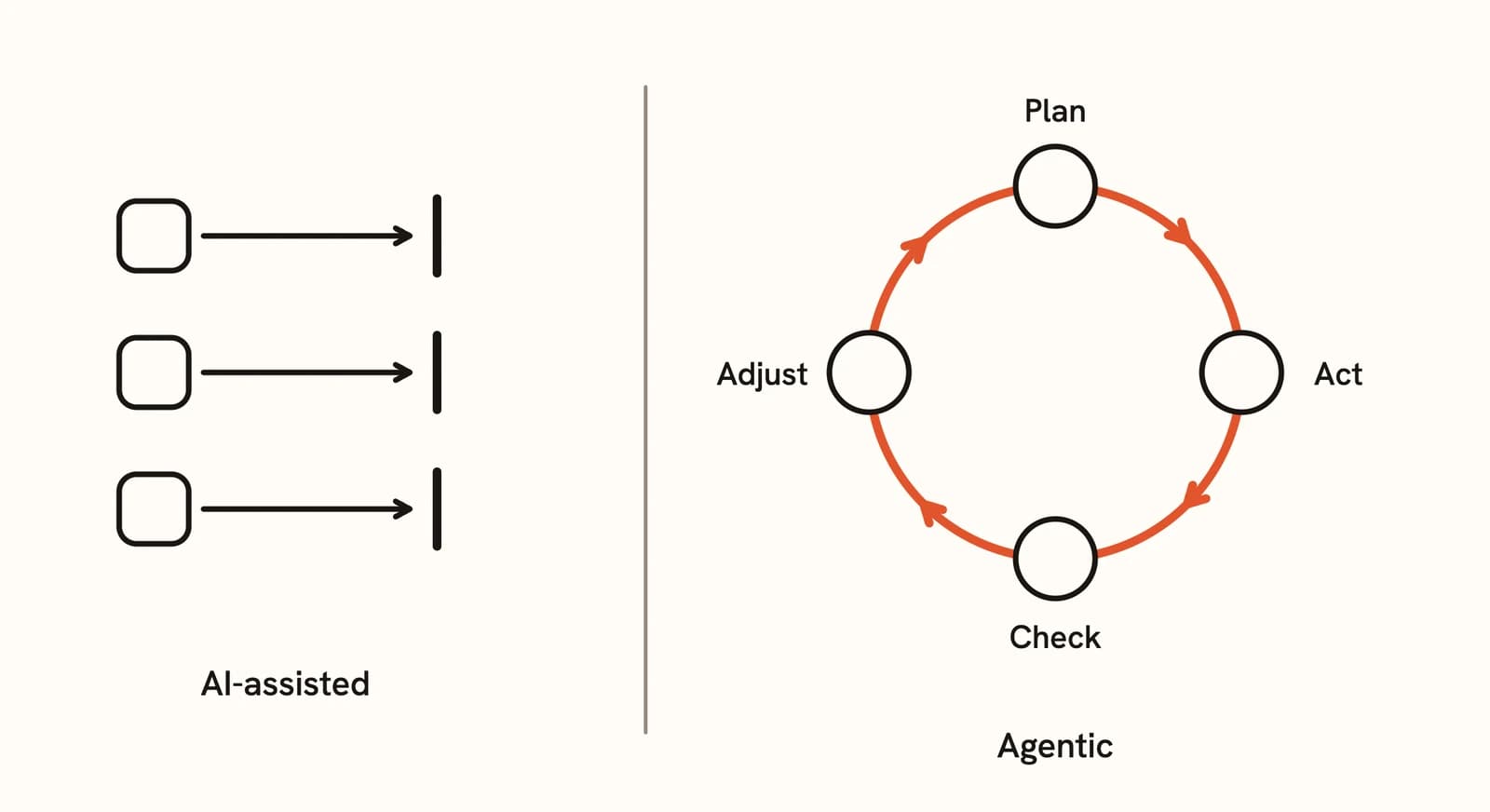
Agentic SEO is autonomous, multi-step optimisation: software that plans, calls tools, reads the result, and adjusts across the whole lifecycle without a human approving every step. Industry coverage only put a name to it in early 2026 (Backlinko, 13 Apr 2026; Search Engine Land's agentic AI in SEO guide), and it is a different category from anything on this list.
This matters more now that AI Overviews appear above many informational results and being cited in an answer counts alongside ranking. Getting quoted in an AI answer rewards definition-first passages, clean schema, and demonstrable trust signals, a lineage that traces back to the foundational GEO paper (Aggarwal et al., 2023) and outlets such as WordStream. A faster first draft helps, but drafts are the least scarce input in the chain.
When AI content stalls, the cause is usually thin entity coverage, missing first-hand signals and an unmaintained internal-link structure. If your bottleneck is rankings or AI citations, no tool on this page fixes that alone; you need a proper internal process or an AI SEO agency that owns the full loop.
Which should you choose?
Match the tool to the job:
- You optimise existing content against the SERP, consider NeuronWriter. Its editor focuses on coverage guidance and works best when a person checks the recommendations.
- You need article drafts through an API, consider Koala AI. Its generation workflow still needs a human to add experience and review factual claims.
- You want one dashboard for keyword to brief to draft to grade, consider Scalenut. Check supported languages, current product features and billing terms against your workflow.
- Your problem is rankings and AI citations, not drafting speed, none of the three alone. You need the layer above them: entity strategy, E-E-A-T, valid schema, site-aware internal links, and post-publish measurement. That is AI SEO as a service, not a writing subscription.
Further reading
- Aristral: AI Overviews optimisation: the technical side
- Aristral: GEO vs SEO: what actually changed
- Aristral: what agentic SEO actually means
- Aristral: white-label AI SEO: what agencies actually sell
- Princeton, Georgia Tech & Allen AI: GEO: Generative Engine Optimization (foundational paper)
For a more detailed look at one established content platform, read our Clearscope review.
Frequently asked questions
Is Koala AI better than Scalenut?
How do Scalenut and NeuronWriter differ?
Do these tools get AI content ranking on their own?
Is Scalenut worth considering?
Are Koala, Scalenut and NeuronWriter agentic SEO tools?
Can these tools write content that appears in Google AI Overviews?
Methodology
This comparison combines hands-on agency use of all three tools with their published capabilities. User-sentiment claims (Scalenut's non-English quality and billing complaints) are drawn from public G2 and Trustpilot reviews; category and AI Overview references are linked inline. There are no affiliate links, fabricated test scores or "best tool" verdicts without stated criteria. Vendor features change, so check current first-party documentation before choosing a tool. Spotted something out of date? Email admin@aristral.com and we'll correct it.
About the author
Taha Bilal
Co-founder, Aristral
Taha Bilal is a co-founder of Aristral, a UK AI automation and SEO agency based in Clifton, Bristol. He has been running SEO and digital-growth campaigns for SMB and SaaS clients since 2018, and now leads Aristral's combined SEO + GEO programmes for service businesses across the UK and US. Corrections and source requests: admin@aristral.com.
LinkedIn