AI Automation
11 Real AI Agent Examples for UK Businesses (By Function)
A practitioner's guide to AI agent examples across sales, support, ops, finance and marketing, with an honest build vs buy verdict for UK SMBs.
Key takeaways
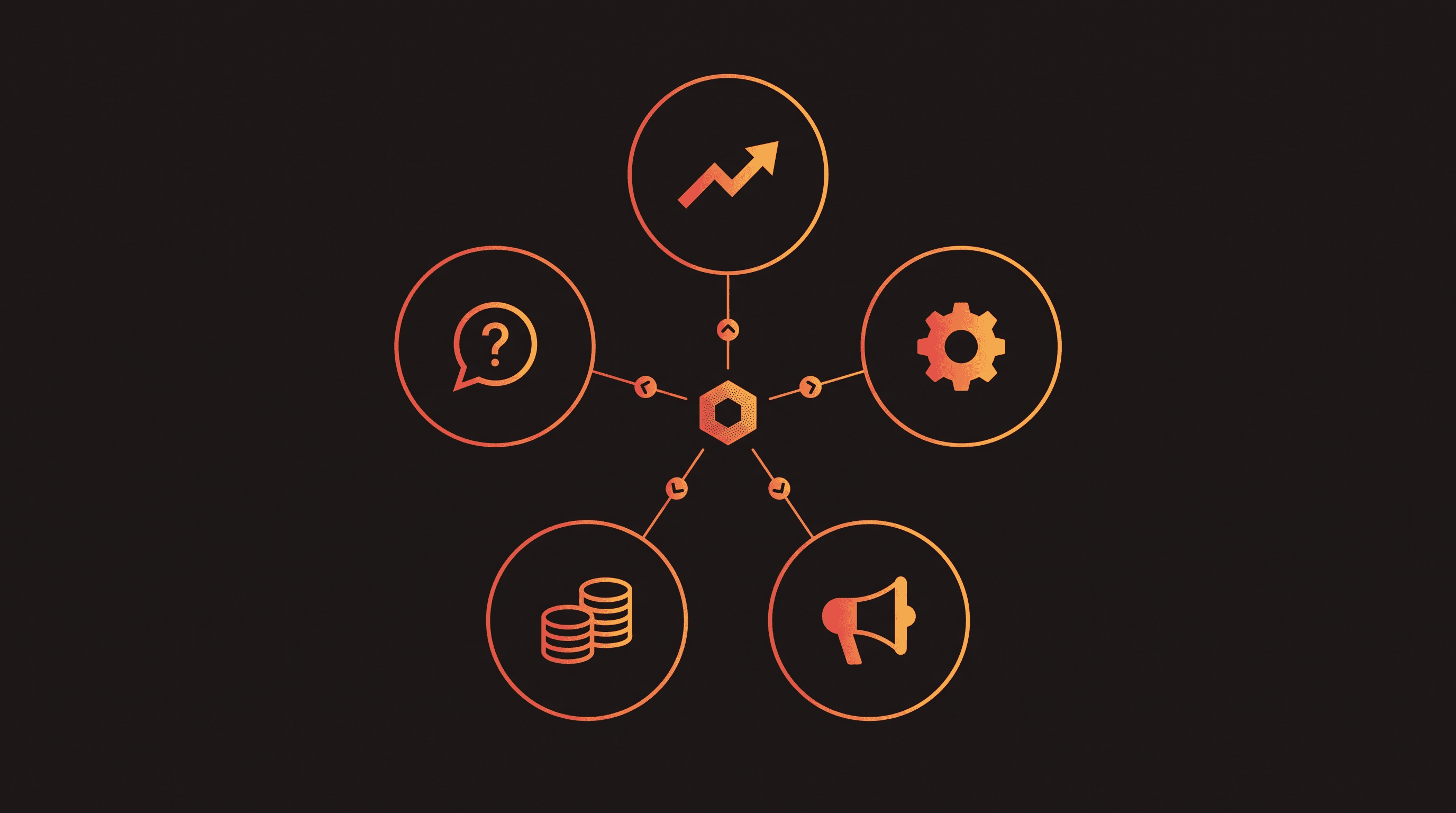
- Structured by function, not industry: 11 AI agent examples across sales, support, operations, finance, and marketing, the way most UK business owners already think about their own org chart.
- One example, one honest limit: every AI agent example here comes with a note on where it typically breaks down, not just where it shines.
- Human oversight isn't optional: even the strongest AI agents still need a person setting the rules and catching the exceptions.
- Type matters: reactive, goal-based, and multi-agent systems behave differently, and picking the wrong type for the job is a common failure mode.
- Build vs buy is a real decision: off-the-shelf tools cover most examples below well; custom is worth it only when deep integration is non-negotiable.
An AI agent is software that can work through a task in multiple steps on its own: deciding what to do next, calling on other tools or systems, and adjusting when the first attempt doesn't land, rather than just returning one reply and stopping. That's the line separating an agent from a chatbot or a fixed script. A chatbot answers the message in front of it with no real memory of what you're trying to achieve; a script runs the same sequence every time, whether or not it still makes sense. Below are 11 AI agent examples for UK businesses, grouped by the function they sit in rather than by industry or vendor, because that's closer to how most owners map out where automation could help.
Every example here is paired with an honest note on where it tends to break down, because most AI agent listicles read like unqualified marketing and that's not how these tools perform in the field. Sales, support, ops, finance, and marketing each get two or three concrete examples, then we cover the different types of AI agents, whether ChatGPT itself counts as one, and when it's worth building a custom agent instead of buying an off-the-shelf tool.
What Makes Something an "AI Agent" vs a Chatbot or Script
Four things separate a genuine AI agent from a chatbot with better branding. Autonomy: it decides the next step itself rather than waiting for a human to prompt each one. Multi-step execution: it can chain several actions together, check a calendar, draft a message, log a record, inside one task rather than stopping after a single reply. Tool and API calling: it can reach into other systems, a CRM, a calendar, a database, rather than just generating text about what someone else should do next. And decision-making under uncertainty: when the obvious path doesn't work, it tries a different one or flags a human, instead of failing silently. A rule-based chatbot or a fixed workflow can look agentic from the outside, but if it can't change its own next step based on what it just found, it's automation rather than an agent. Google Cloud's own definition covers the same autonomy-and-tool-use distinction if you want a vendor's fuller take on it.
AI Agent Examples for Sales
Sales is where AI agents earn their keep fastest, because the tasks are repetitive, high-volume, and already partly scripted in most teams. The three examples below cover the funnel from first contact to booked meeting; see our deeper breakdown of AI lead generation for how these connect into a full pipeline.
- Lead qualification agent: scores and routes inbound leads by reading the enquiry, checking it against your ideal customer profile, and pulling in enrichment data, company size, industry, intent signals, before a rep ever sees it. Where it breaks down: it needs a clean, consistently structured lead source; garbage in, garbage out applies harder to an agent than to a human who can use judgement on messy data.
- Outbound follow-up agent: sends personalised follow-up sequences after a demo or enquiry, adjusting tone and timing based on how the prospect has engaged so far, opened but didn't reply, clicked a link, gone quiet. Where it breaks down: personalisation is only as good as the CRM data behind it, and it can misread context on a genuinely unusual deal.
- Meeting-booking agent: handles the back-and-forth of finding a slot that works, checking calendar availability, and confirming a meeting without a human touching the calendar at all. Where it breaks down: multi-party scheduling across time zones or conflicting internal calendars still trips most of these up.
AI Agent Examples for Customer Support
Support is the most mature use case for AI agents: query patterns repeat constantly, and a slow reply costs you a customer. Mainstream helpdesk platforms like Zendesk now build this pattern directly into their product, which is part of why it's the most proven category here.
- Tier-1 query resolution agent: answers common questions directly from your help centre, order system, or FAQ content, resolving the request without a human touching the ticket. Where it breaks down: anything outside the documented cases, or a customer who's already frustrated, needs a person, and a badly configured agent will loop them instead of escalating.
- AI receptionist-style phone agent: answers the business line, works out what the caller wants, and books an appointment directly into a connected calendar; see our full breakdown of the AI receptionist for UK pricing and where it holds up on a real call. Where it breaks down: distressed callers, strong regional accents, and multi-step conditional requests are still weak points.
AI Agent Examples for Operations
Ops rarely gets the spotlight, but this is where AI agents quietly save the most hours: the work is process-heavy and not customer-facing, so mistakes are cheaper to catch and fix.
- Scheduling and dispatch agent: allocates jobs to the right engineer or team based on location, skill, and availability, and rebalances the day automatically when something falls through. Where it breaks down: it needs genuinely accurate live data, location, job duration, skill tags, to dispatch well; stale data produces confidently wrong schedules.
- Internal workflow automation agent: handles the connective tissue between systems, moving a new starter's paperwork through onboarding, or a completed job through invoicing, without someone manually pushing it along; similar in shape to CRM automation applied to the record side of the business rather than the customer-facing side. Where it breaks down: workflows with a lot of exceptions need those exceptions mapped out up front, or the agent gets stuck on them repeatedly.
AI Agent Examples for Finance
Finance teams were automating rule-based work long before 'agent' became the term for it, which makes this one of the more proven categories; our guides to AP automation and AI in accounting go deeper on both.
- Invoice and AP processing agent: captures an incoming invoice, extracts the data, matches it against a purchase order, and routes it for approval, the same workflow covered in our AP automation guide, run without manual data entry. Where it breaks down: unusual invoice formats or missing purchase orders still need a human to resolve.
- Cash-flow forecasting agent: pulls live data from your accounting platform and pipeline to project cash position weeks ahead, flagging a likely shortfall before it happens rather than after. Where it breaks down: it's only as reliable as the sales and payment-timing data feeding it, and it can't account for a deal that falls through at the last minute.
AI Agent Examples for Marketing
Marketing agents are newer and less proven than the categories above, worth piloting rather than betting the whole function on straight away.
- Content ops agent: drafts, formats, and schedules routine content, briefs, product updates, social posts, from a content calendar, freeing a marketer to focus on strategy and the pieces that need a real point of view. Where it breaks down: anything requiring original research, a strong opinion, or brand judgement still reads as generic without heavy human editing.
- SEO and GEO monitoring agent: tracks rankings, AI Overview citations, and technical issues across a site, flagging drift before it costs traffic rather than someone noticing a month later in a report. Where it breaks down: it can tell you something changed, not always why, so it still needs a person who understands search to interpret the signal.
What Are the Different Types of AI Agents?
"AI agent" covers a range of underlying designs, and the difference matters because it explains why some agents feel instant and others feel slow and deliberate. Zapier's own explainer on AI agents covers this same reflex-to-multi-agent spectrum in more technical depth, if you want to go further than the practical version below.
- Reactive agents: respond to the current input with no memory of past interactions; fast and cheap, but can't handle anything needing context from earlier in the exchange.
- Deliberative agents: build an internal model of the situation and reason through options before acting; slower, but better suited to tasks with real trade-offs.
- Goal-based agents: work backwards from a defined outcome, book this meeting, resolve this ticket, and choose whichever actions get there, rather than following a fixed script.
- Learning agents: adjust their own behaviour over time based on feedback, in theory; in practice most business deployments today are goal-based agents on a fixed model rather than ones that retrain themselves.
- Multi-agent systems: several agents, each with a narrower job, working together and handing off to each other, similar in spirit to how a human team splits up a project.
Is ChatGPT an AI Agent?
Not by default. Out of the box, ChatGPT answers the message in front of it: no persistent goal, no autonomous multi-step execution, no ability to act on your systems unless you've connected something. It becomes agent-like once you add tool use: browsing, code execution, connected apps, or a custom integration wired into an API. OpenAI's own documentation on function calling describes exactly this: giving the underlying model a way to interface with external systems and take action, rather than only generate text. That's the same distinction covered above: the base model is closer to a very capable chatbot, and the agent behaviour comes from what's bolted on top of it, tools, memory, a defined goal, rather than from the model itself. Most of the AI agent examples above are built this way too: a capable underlying model plus tool access, task memory, and clear boundaries on what it's allowed to do without a human.
Build vs Buy: Off-the-Shelf Agent Tools vs a Custom AI Agent
Off-the-shelf covers most of the examples above well, and there's no reason to build custom for a generic case. Platforms built for a single function, a sales engagement tool with a built-in agent, helpdesk software with AI triage, accounting software with an AP module, are faster to set up, cheaper upfront, and maintained by someone else. That's the right starting point for most UK SMBs testing whether an AI agent actually earns its keep in a given function.
| Off-the-shelf agent tools | Custom AI agent | |
|---|---|---|
| Speed to deploy | Days to weeks | Weeks to months |
| Typical cost shape | Subscription, per-seat or per-agent pricing | Project-based build, then a lower incremental run cost |
| Integration depth | Covers common systems: Xero, Salesforce, major helpdesks | Built to connect to whatever you actually run, including niche or internal tools |
| Best for | A common task an established platform already handles well | A workflow specific to your business that off-the-shelf can't reach |
Build custom when the agent needs deep integration with a specific internal system, a bespoke practice management tool, an industry-specific scheduler, that off-the-shelf platforms don't connect to cleanly, or when you're running the same workflow across several tools already and want one agent orchestrating across all of them rather than a handful of disconnected point solutions. We build these agents ourselves for UK SMB clients across all five functions, so treat the judgement above as practitioner opinion from an interested party: it reflects what we've seen work, not a neutral recommendation. For a wider view of what's realistic to automate first, see 7 AI automations UK SMBs are already running.
Frequently asked questions
What are the top AI agents businesses actually use?
The most common today sit in support (query resolution, ticket triage), sales (lead qualification, follow-up), and finance (invoice processing, expense categorisation), because these tasks are repetitive, high-volume, and already partly rule-based. Operations and marketing agents are catching up but are generally less mature and need closer human oversight.
Is ChatGPT considered an AI agent?
Not by default. Standard ChatGPT answers one message at a time with no persistent goal or ability to act on your systems. It becomes agent-like once you add tool use, browsing, connected apps, or a custom API integration, which lets it chain steps together and take action rather than just generate text.
What's the difference between an AI agent and agentic AI?
An AI agent is a specific piece of software built to complete a task autonomously. Agentic AI is the broader concept: the approach of building systems that plan, decide, and act with some independence. In practice, the terms get used almost interchangeably in vendor marketing, but agentic AI is the design philosophy and an agent is the product of it.
Do small businesses really need AI agents, or is this enterprise-only?
Most examples in this guide, support triage, invoice processing, meeting booking, are used successfully by small teams, not just large enterprises. The barrier to entry has dropped: off-the-shelf platforms now bundle agent features into standard SMB pricing tiers, so it's rarely an enterprise-only decision anymore.
What's the easiest AI agent to start with?
A tier-1 support agent or a meeting-booking agent, since both handle a narrow, well-defined task with a clear success condition and low risk if it gets something wrong. Start with one function, measure whether it actually saves time, then expand rather than automating everything at once.
Can AI agents work together as a team?
Yes, this is called a multi-agent system: several agents, each handling a narrower job, hand off to each other in sequence. A lead qualification agent might pass a hot lead straight to a meeting-booking agent, for example. It's a more advanced setup than a single-function agent and needs careful design to avoid handoff errors.
AI agents are genuinely useful for the repetitive, well-defined slice of these five functions, not a replacement for the judgement calls that still need a person. If you're weighing which function to automate first, or want a custom agent built around a system these platforms don't connect to, talk to us about your use case.
Methodology
How we put this together: the AI agent examples and the where-it-breaks-down notes in this guide reflect patterns of agent deployment we're seeing in UK SMB automation work day to day, not named client case studies, invented ROI figures, or performance statistics. Aristral builds AI agents across sales, support, operations, finance, and marketing directly for UK SMB clients, so treat the build-vs-buy judgement here as practitioner opinion from an interested party rather than neutral analysis; nothing in this guide is a guaranteed outcome. Where a named platform is mentioned, ChatGPT included, verify its current capabilities against the vendor's own product page, since features and tool access change faster than a guide like this can track. Written by Taha Bilal, who founded Aristral in 2024 and runs delivery himself. Corrections to admin@aristral.com.
About the author
Taha Bilal
Co-founder, Aristral
Taha Bilal is a co-founder of Aristral, a UK AI automation and SEO agency based in Clifton, Bristol. He has been running SEO and digital-growth campaigns for SMB and SaaS clients since 2018, and now leads Aristral's combined SEO + GEO programmes for service businesses across the UK and US. Corrections and source requests: admin@aristral.com.
LinkedIn →Filed under: AI Automation