AI Automation
WhatsApp Automation for UK Businesses: A Practical Guide
A practitioner's guide to WhatsApp automation for UK businesses: App vs API, real use cases by industry, and the opt-in rules you can't skip.
Key takeaways
- Two different products: the free WhatsApp Business App handles basic automation alone; the paid WhatsApp Business Platform (API) needs a Business Solution Provider.
- Most single-location UK businesses: only need the free App's built-in automation: greeting messages, away messages, and quick replies.
- The Platform earns its cost: once you need chatbot flows, CRM integration, multiple agents, or broadcast campaigns.
- Opt-in rules apply either way: WhatsApp automation follows the same consent rules as email and SMS marketing.
- Meta's own rules sit on top of UK law: the 24-hour service window and template message rules apply in addition to PECR and UK GDPR.
WhatsApp automation is what happens when a UK business stops answering every message by hand and lets the WhatsApp Business App or the WhatsApp Business Platform do some of that work: greeting new contacts, replying with a saved answer, confirming a booking the moment it's made, or routing an enquiry before anyone's seen it. For most small businesses, that starts with the free App's built-in tools. For more volume, more than one person answering, or a CRM to feed, it means the paid Business Platform, usually called the WhatsApp API.
The confusion almost everyone hits first is thinking these are the same product with a paid upgrade bolted on. They're not: the App is a single-device tool with a fixed set of automations, and the Platform is different infrastructure, accessed through an approved provider and built for scale. This guide covers the real difference between the two, what you can automate on each, how that plays out by UK industry, the tools worth knowing, and the opt-in rules that apply once automated messaging starts to mean marketing.
WhatsApp Business App vs WhatsApp Business Platform (API): The Actual Difference
Both products are built by Meta and let customers message your business, and that's roughly where the similarity ends. The WhatsApp Business App is free: built around a single phone number and one primary device, plus a few linked devices for viewing chats, but fundamentally a one-person view of the conversation. Basic automation is baked in: a greeting for new contacts, an away message outside your hours, quick-reply shortcuts, and reusable templates. For a sole trader, a single shop, or a small clinic where one person, or a tight rota, handles WhatsApp, that's often genuinely enough.
The WhatsApp Business Platform, still widely called the WhatsApp API, is different infrastructure entirely. You don't download it: you apply through an official Meta Business Solution Provider, get your WhatsApp Business Account verified, and connect it to your automation or CRM tooling. Meta's own comparison is blunt about who each is for: the Platform connects thousands of agents and bots to one number, not one person on one phone. Pricing differs too: since July 2025, Meta charges per template message sent, by category and country, while replies inside an open 24-hour window stay free. Setup takes real work: verification and a provider relationship, why most businesses move to the Platform only once the App's ceiling hurts.
| WhatsApp Business App | WhatsApp Business Platform (API) | |
|---|---|---|
| Cost | Free to download and use | Free within the 24-hour reply window; paid per template message outside it |
| Devices/users | One phone number, one primary device, plus a few linked devices for viewing chats | Connects thousands of agents and bots to one number |
| Automation | Greeting message, away message, quick replies, saved templates | Chatbot flows, CRM-triggered messages, broadcast campaigns, shared team inbox |
| Who it's for | Sole traders, single-location shops, small teams | Multi-agent teams, CRM-integrated businesses, high message volume |
| Setup | Download and go | Apply via a Meta Business Solution Provider, verify your business, integrate |
If you're not sure which side of that line you're on, the test is simple: are you missing messages, duplicating replies across more than one phone, or copying WhatsApp conversations into a CRM by hand? Those are Platform problems. If one person can keep on top of it with the App's automation switched on, stay there.
What You Can Actually Automate on WhatsApp
Once you're clear which product you're using, the options break down into a handful of concrete jobs, some available on the free App, some only on the Platform.
- Auto-replies and away messages: instant acknowledgement outside opening hours or mid-job, on the free App.
- Quick-reply templates: saved answers to repeat questions: opening hours, pricing bands, availability. Also App-native.
- Chatbot qualifying and routing flows: a structured chatbot conversation that routes the enquiry, needs the Platform. Same trade-off as AI chatbots vs live chat: automation for volume, a person for real judgement.
- Broadcast campaigns: an update or offer to a list of opted-in customers rather than one conversation at a time. Platform-only, subject to the opt-in rules below.
- Order and booking confirmations: triggered the moment someone books online or an order status changes, rather than sent by hand.
- CRM-triggered follow-ups: sent off something happening in your CRM, a quote going unanswered, a job marked complete, where connecting WhatsApp to your CRM pays off. Also an effective lead capture channel, since customers already have the app open.
WhatsApp Automation by UK Industry
The same handful of automations plays out differently depending on what you actually run. Four patterns come up constantly across UK SMBs.
Hospitality and restaurants
Booking confirmations sent the moment a table's reserved, a reminder a couple of hours before it, and an automated reply to anyone asking about opening hours or a menu, all before someone's picked up the phone. Same instinct behind WhatsApp confirmations for restaurants: catching the booking as it happens, not chasing it up later.
Trades and home services
Job confirmations, an arrival-time update when you're running late, and a photo of finished work sent straight from the job, all without a phone call. For a one-person or small-team trade business, this usually replaces the awkward running-late call, paired well with AI phone answering for the calls that still come in.
Retail and e-commerce
Order status updates, dispatched, out for delivery, ready for collection, sent automatically from your order system, plus abandoned-cart nudges to customers who've already opted in. This is where broadcast messaging earns its keep, provided the opt-in is genuine rather than assumed.
Clinics, salons and beauty
Appointment reminders sent the day before cut no-shows more effectively than a poster in reception ever will, and a rebooking prompt a few weeks after a treatment brings clients back without anyone chasing a calendar by hand.
Tools for WhatsApp Automation
Once you're past the App's built-in automation, WhatsApp automation tooling splits into three broad categories, and none is inherently the right answer for every business.
- Official Business Solution Providers: Meta-vetted platforms like Wati or AiSensy that give you the Business Platform with a shared inbox, a no-code chatbot builder, and broadcast tools layered on top, generally the fastest route to a finished product.
- No-code automation layers: connecting WhatsApp into a wider stack, tools like Zapier, Make or n8n, useful if WhatsApp is one channel among several triggering the same workflows.
- Direct API builds: connecting straight to Meta's Cloud API yourself, or through a developer, full control over conversation logic but needs technical resource to build and maintain.
None of these is universally right. Go with a Business Solution Provider if you want working automation fast and have no in-house technical resource. A no-code layer makes more sense if you're already running automation elsewhere for other channels. Only reach for a direct build when the logic is genuinely custom and you've got a team to support it long-term.
Compliance: The Opt-In Rules You Actually Need to Follow
Automating WhatsApp doesn't remove the legal requirements around who you're allowed to message, and this is where WhatsApp automation and UK law actually meet. Under the Privacy and Electronic Communications Regulations, PECR, the definition of electronic mail is broad enough to cover instant messaging, including WhatsApp, not just email and SMS. Direct marketing to an individual over WhatsApp needs either their consent or the soft opt-in exemption: you collected their details directly during a sale, you're marketing similar products, and you gave a clear, free way to opt out, repeated in every message since.
Business-to-business messaging is treated differently in one respect: the consent rule doesn't apply to a genuine corporate subscriber, a company's general number or inbox rather than a named person. The moment you're messaging a named individual, UK GDPR still applies, and you need a lawful basis, usually legitimate interests, properly weighed up rather than assumed. None of this changes because a chatbot sent the message instead of a person.
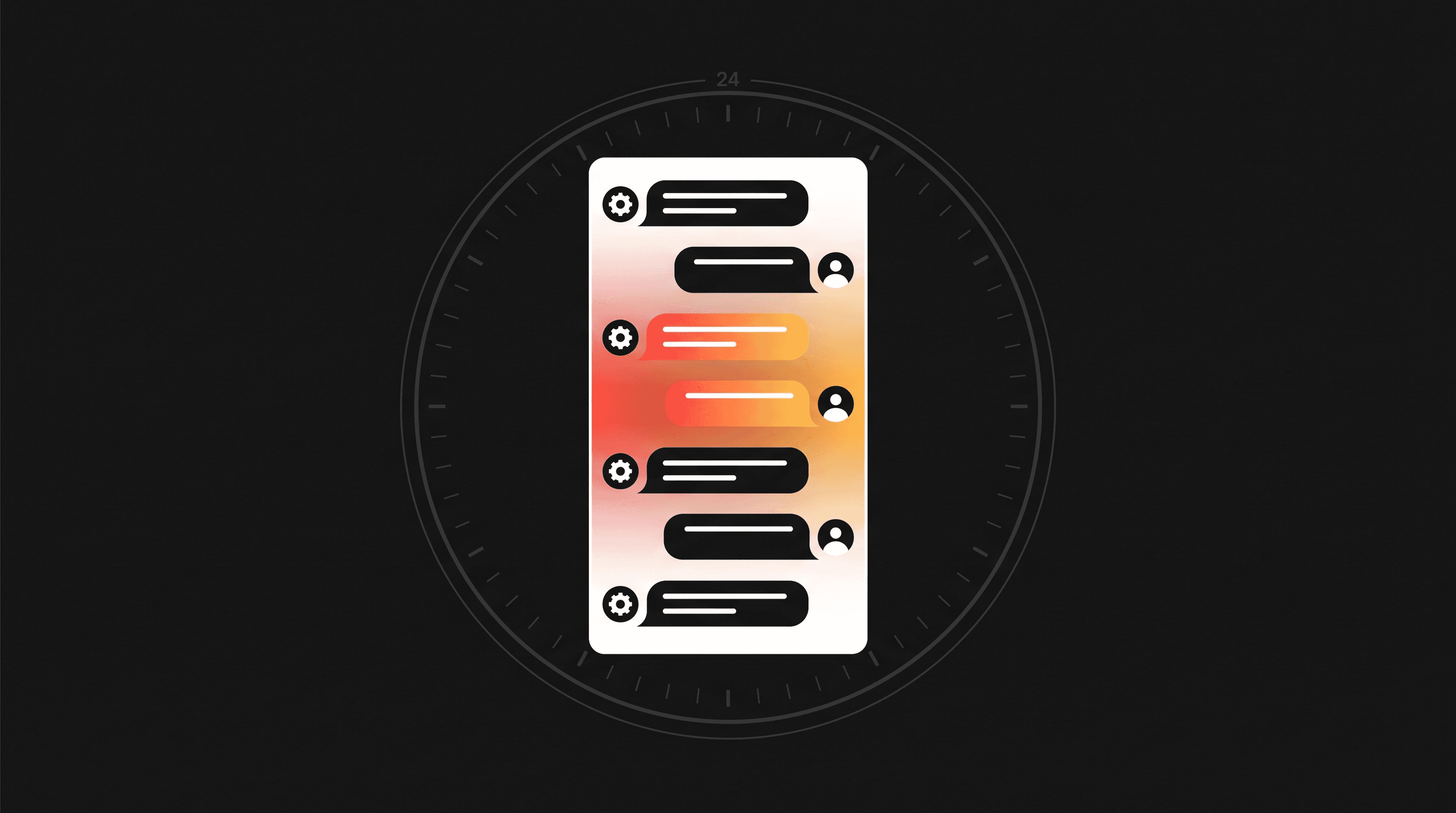
Meta adds its own layer on top. On the Business Platform, free-form replies only work inside an active 24-hour customer service window, opening when a customer messages you and closing 24 hours after their last message. Outside that window, you can only reach them with a pre-approved template message: marketing templates charge whenever sent, utility templates free inside the window and charged outside it. Check current ICO guidance and Meta's Business Help Centre before switching on broadcast messaging: principles are stable, thresholds and pricing move.
Should You Build This Yourself or Get Help?
If you're a single-location business and the App's built-in automation covers what you need, don't overbuild this: download it, set up greeting and away messages, save your quick replies, done. The case for the Platform shows up once you're juggling more than one person on the same number, chasing manual updates between WhatsApp and your CRM, or wanting broadcast campaigns done properly. That's a provider relationship and verification, not a weekend project.
We build WhatsApp automation as part of the wider AI automation work we do for UK SMB clients, wiring it into whatever CRM or booking system you're already running rather than selling a generic bot. If you're weighing up whether you need the Platform, or the free App is genuinely enough, that's worth a straight answer, not a sales pitch.
Frequently asked questions
What's the difference between WhatsApp Business App and the WhatsApp API?
The App is a free, single-device tool with built-in automation: greetings, away messages, and quick replies. The API, more properly the WhatsApp Business Platform, is paid infrastructure accessed through a Meta Business Solution Provider, built for multiple agents, chatbot flows, CRM integration, and message volume the App was never designed to handle.
Is WhatsApp automation legal in the UK?
Yes, automation itself isn't restricted. What's regulated is who you message and why: PECR and UK GDPR apply to WhatsApp the same way they apply to email and SMS, so any automated marketing message to an individual still needs consent or the soft opt-in exemption, regardless of whether a person or a chatbot sent it.
Do customers need to opt in before I message them on WhatsApp?
For marketing messages to an individual, yes: you need either their consent or to meet the soft opt-in conditions, their details came from you directly during a sale, you're marketing similar products, and you gave a clear opt-out. Genuine business-to-business messages to a corporate contact are treated differently, but a named person still needs a lawful basis under UK GDPR.
Can I automate WhatsApp without coding?
Yes, for most of what a small business needs. The free App covers basic automation with no setup beyond the app itself. For the Business Platform, official providers like Wati or AiSensy offer no-code chatbot builders and shared inboxes, so you don't need a developer unless your logic gets genuinely custom.
How much does WhatsApp automation cost for a small UK business?
The Business App is free. The Business Platform charges per template message sent, by category, since Meta moved to this model in July 2025, while replies inside an open 24-hour conversation stay free. Provider platforms add their own subscription on top; check current pricing on the vendor's own page before committing.
Can WhatsApp automation connect to my existing CRM?
Yes, on the Business Platform. Most providers and no-code automation tools offer a CRM connection so a WhatsApp conversation can trigger a follow-up, log against a contact, or update a deal stage automatically. The free App has no CRM integration, one of the clearest reasons to move to the Platform.
WhatsApp automation isn't one product: a free App that covers most single-location businesses on its own, and a paid Platform worth the setup once you're juggling multiple agents, CRM triggers, or broadcast volume. Get the opt-in rules right regardless of tier, and talk to us about getting your WhatsApp flow built properly if the Platform is where you're heading.
Methodology
This guide's compliance section is built directly from the ICO's own guidance on electronic mail marketing under PECR, including the soft opt-in exemption and the corporate subscriber exemption, and from Meta's WhatsApp Business Platform pricing documentation covering the per-template pricing model that took effect in July 2025 and the 24-hour customer service window rules, all checked in August 2026. The App-vs-Platform comparison draws on Meta's own WhatsApp Business product pages. Rules and pricing on both sides move; check ico.org.uk and Meta's Business Help Centre directly before relying on specifics for a live campaign. Aristral builds WhatsApp and wider AI automation for UK SMB clients, so treat the build-vs-buy judgement here as practitioner opinion from an interested party rather than neutral advice, and nothing here is a guaranteed outcome. Written by Taha Bilal, who founded Aristral in 2024 and runs delivery himself. Spot an error or an outdated rule? Email admin@aristral.com.
About the author
Taha Bilal
Co-founder, Aristral
Taha Bilal is a co-founder of Aristral, a UK AI automation and SEO agency based in Clifton, Bristol. He has been running SEO and digital-growth campaigns for SMB and SaaS clients since 2018, and now leads Aristral's combined SEO + GEO programmes for service businesses across the UK and US. Corrections and source requests: admin@aristral.com.
LinkedIn →Filed under: AI Automation